

Center Aisle vs Shed Row Horse Barn
Choosing the Right Layout for Your Pennsylvania Property
The right horse barn layout depends on how your horses are housed, how daily chores are handled, and how the structure performs in winter conditions.
When Layout Impacts Horse Health, Workflow, and Long-Term Value
Choosing the right horse barn layout is not simply a construction decision — it’s an operational decision. The layout you choose directly affects ventilation, daily workflow, winter protection, and the long-term performance of your equine facility.
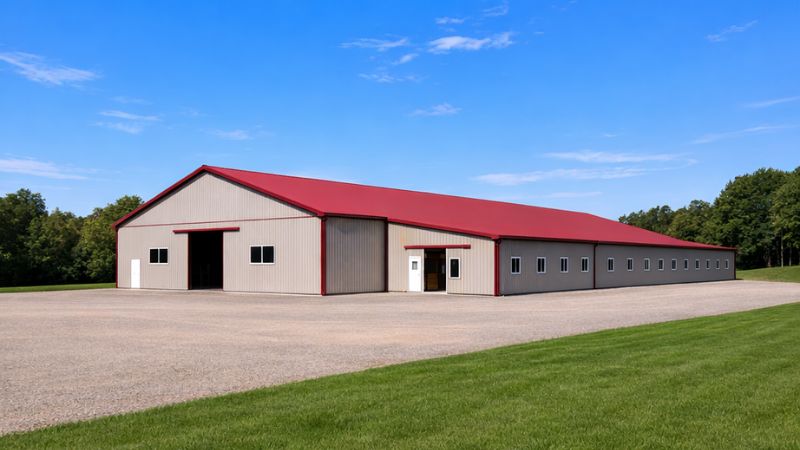
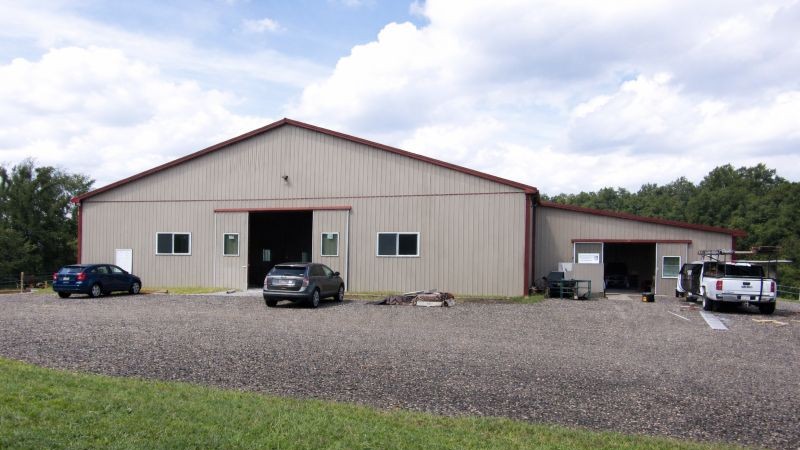
Indoor riding arena and horse barn designed for year-round equine use in Pennsylvania.
In Pennsylvania, where snow loads, humidity swings, and freeze-thaw cycles are part of reality, layout is not just about preference. It is about performance.
At Timberline Buildings, we design Amish-crafted equine facilities engineered specifically for Pennsylvania conditions. The question is not which layout looks better — it’s which one works better for your operation.
Let’s examine the two most common options.
Planning a custom horse barn in Pennsylvania?
Explore our full equine building gallery to see real project examples.
👉 View All Equine Buildings
.
The Center Aisle Horse Barn: Controlled, Structured, Year-Round
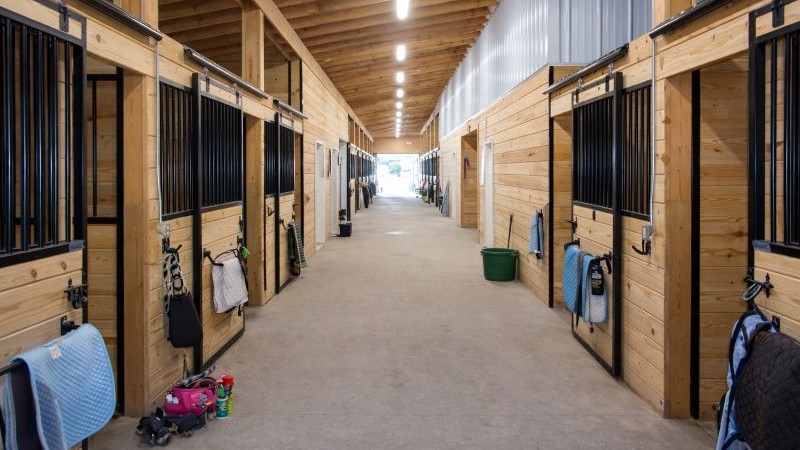
A center aisle barn places stalls on both sides of a fully enclosed interior corridor. This layout is often chosen by serious private owners and boarding operations for one key reason: control.
With a center aisle design, you gain:
- A protected interior workspace during winter storms
- A centralized feeding and cleaning path
- More predictable ventilation management
- Easier integration of tack rooms, wash bays, and storage areas
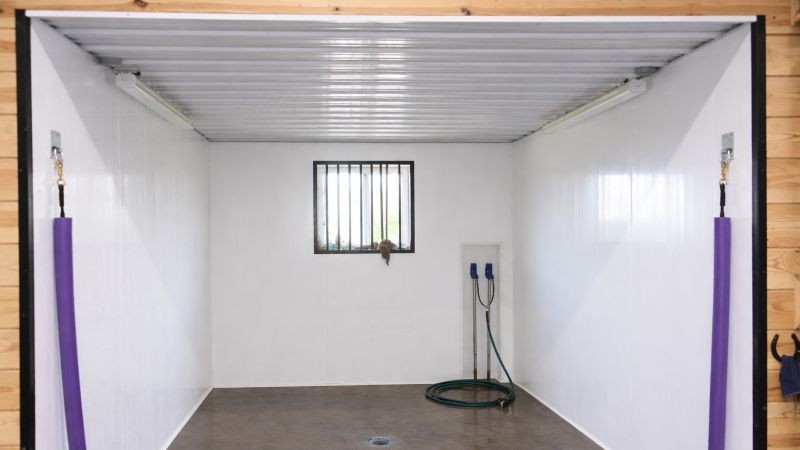
Dedicated wash stall designed for grooming and horse care routines.
Because the structure is enclosed, insulation upgrades, ridge vent systems, and condensation control strategies can be implemented more effectively. In Pennsylvania winters, this becomes significant.
This layout tends to serve best when:
- Horses are stabled year-round
- Daily operations must continue regardless of weather
- Future expansion or revenue use (boarding) is possible
- Workflow efficiency matters
It is a disciplined, organized design — built for structure and predictability.
Curious what your own horse barn layout could look like?
Use our design tool to customize size, layout, and features.
👉 Design Your Horse Barn
.
The Shed Row Barn: Open, Efficient, Naturally Ventilated
A shed row barn arranges stalls in a single line, typically opening to the exterior under an extended overhang. It is simpler in structure but not necessarily inferior.
The advantage of a shed row lies in airflow and footprint efficiency. With proper overhang depth and drainage planning, it provides excellent natural ventilation — particularly beneficial when horses spend significant time outdoors.
Shed row layouts often make sense when:
- The operation is smaller and private
- Horses rotate heavily between pasture and shelter
- Seasonal housing is the primary need
- Simplicity and expandability are priorities
However, performance depends heavily on engineering details. Without proper grading, overhang design, and structural load planning, a shed row barn can struggle in harsh winter conditions.
Pennsylvania adopted a statewide Uniform Construction Code, which governs commercial construction requirements. You can review the state framework here:.
Which Horse Barn Layout Performs Better in Pennsylvania?
This is the wrong question.
The better question is: Which layout aligns with how you manage your horses?
When planning a horse barn layout in Pennsylvania, climate conditions, ventilation strategy, and daily barn workflow should guide your decision.
Pennsylvania’s climate demands attention to:
- Snow load engineering
- Moisture control
- Wind exposure
- Condensation management
A center aisle design typically offers stronger protection and climate control. A shed row, when properly engineered, can perform very well for operations with lighter winter dependence.
The key distinction is not style — it is operational intensity.
An equine building is not simply another pole barn. Stall placement, airflow design, structural load calculations, and long-term durability must function as a system.
Structural Details That Separate Premium Builds from Basic Barns
Layout selection is only the beginning. Execution defines performance.
When planning a custom horse barn in Pennsylvania, serious owners evaluate:
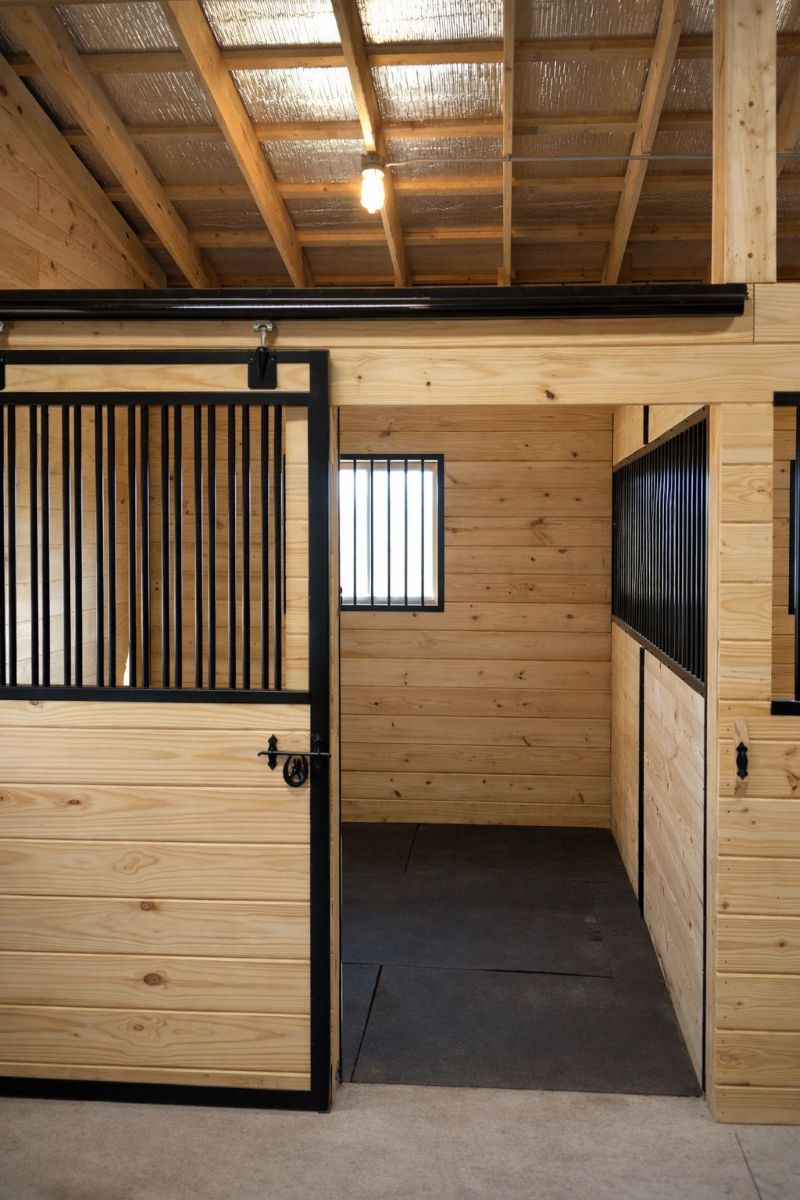
- Stall sizing appropriate for breed and usage
- Reinforced kickboard protection
- Proper ridge vent systems
- Snow load engineering specific to your county
- Overhang depth relative to wind exposure
- Wash bay placement and drainage
- Tack room insulation
- Long-term condensation control
Amish craftsmanship is not about nostalgia. It is about structural precision, disciplined construction, and durability under load.
A premium equine facility should feel solid, functional, and intentional — not improvised.
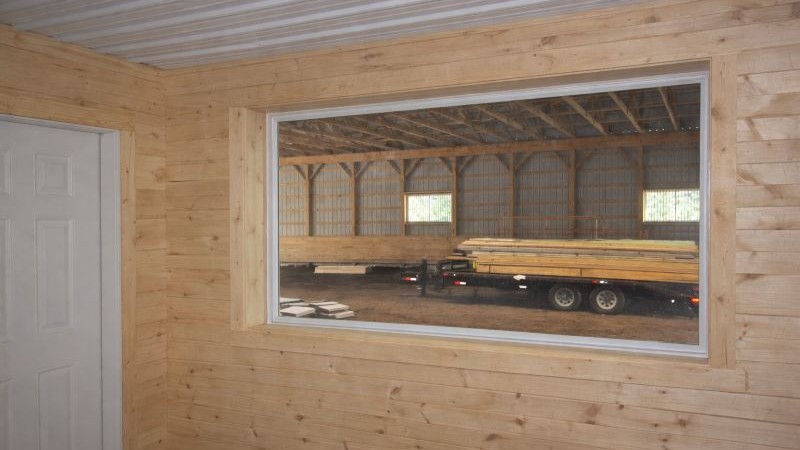
Viewing window between horse barn and riding arena improves supervision and safety.
Wondering how horse barn projects are typically financed?
Read our guide explaining financing options for pole barn projects.
👉 How to Finance a Pole Barn
.
Making the Right Decision for Your Operation
Before selecting a layout, consider:
- How many horses will be housed year-round?
- Do you require interior workspace in winter?
- Are you planning to expand within five years?
- How important is workflow efficiency?
- What level of environmental control do you expect?
The right layout supports your horses and your daily operation — not just your aesthetic preference.
Start with Strategy, Not Just Size
If you are planning a horse barn in Pennsylvania, begin with how your operation functions — not simply the number of stalls.
The right structure should support ventilation, protect against snow load, streamline daily workflow, and hold long-term value on your property.
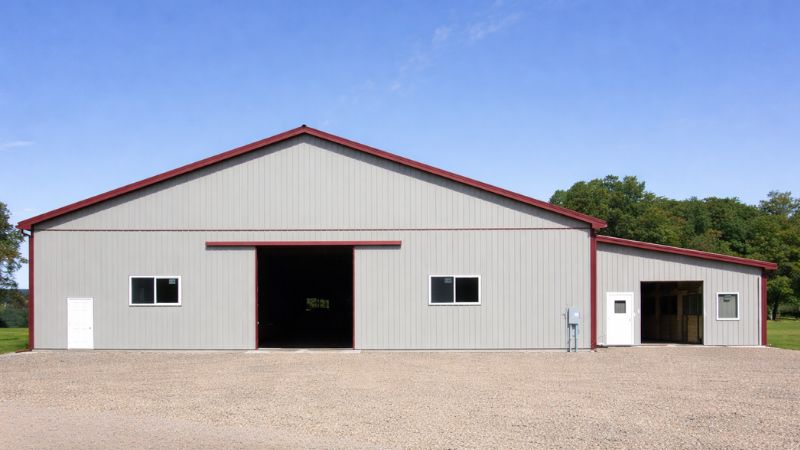
Custom equine facility combining horse barn and indoor riding arena.
Frequently Asked Questions
What is the most popular horse barn layout?
The center aisle horse barn is one of the most common layouts for equine facilities. It places stalls on both sides of a central aisle, creating an organized workflow and protecting horses and handlers from harsh weather conditions.
Are shed row horse barns good for Pennsylvania farms?
Shed row barns can work well on Pennsylvania farms when horses spend significant time outdoors. However, proper overhang design, drainage, and structural engineering are important to ensure the building performs well during winter weather.
What size stalls should a horse barn have?
Most horse stalls range between 10×10 and 12×12 feet, although larger breeds often benefit from 12×14 stalls for additional comfort and movement.
Is ventilation important in horse barn design?
Yes. Proper ventilation helps control moisture, reduce ammonia buildup, and maintain healthier air conditions for horses. Ridge vents, eave vents, and natural airflow design all contribute to better barn environments.
Can a horse barn be expanded later?
Many post-frame equine barns are designed for future expansion, allowing additional stalls, lean-tos, or storage areas to be added as the operation grows.
If you’re ready to move forward:
No signup • Takes 2 minutes
Personalized pricing • No obligation
Built in Pennsylvania • Amish Craftsmanship • Trusted Since 2003