

How Farmers Plan Pole Barn Layouts for Equipment and Workshop Space
Practical Layout Tips for Working Farms in Pennsylvania
A well-planned farm pole barn layout makes daily work easier by improving equipment flow, reducing tight maneuvering, and supporting long-term efficiency on Pennsylvania farms.
Tractors move in and out throughout the day. Implements get swapped during planting and harvest. Repairs and maintenance often happen in the same space.
That’s why layout matters just as much as building size.
A well-planned pole barn layout helps equipment move efficiently, prevents tight maneuvering, and makes everyday work easier during busy seasons.
At Timberline Buildings, we’ve worked with Pennsylvania farmers long enough to see which layouts work well—and which ones cause frustration later.
Before deciding on building size or door placement, it helps to think about how the building will actually function during daily farm operations.
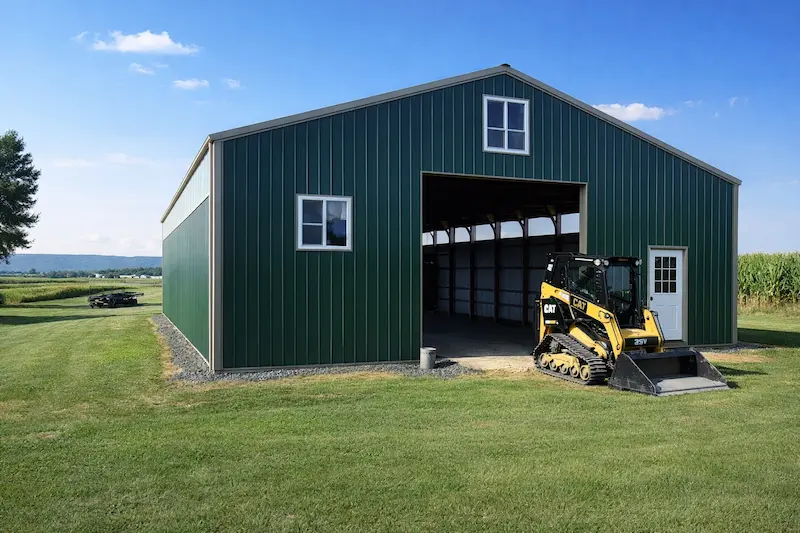
A practical pole barn layout designed for daily farm equipment flow
Planning a farm building that actually works for your equipment?
Explore real agricultural projects built for Pennsylvania farms.
👉 View Agricultural Buildings
.
Start With Your Farm Pole Barn Layout and Daily Workflow
Every farm operates differently, and the best building layouts reflect that.
Some buildings are used mainly for equipment storage. Others also function as repair shops, maintenance areas, or seasonal storage for seed, materials, or hay.
The most effective layouts usually start with a simple question:
How will equipment move through the building during a normal workday?
A practical farm pole barn layout follows how equipment naturally moves across your property.
Think about:
- where tractors typically enter the property
- which direction equipment travels to reach fields
- where fuel tanks, silos, or feed areas are located
- how often equipment moves between jobs
When the building layout follows the natural movement of equipment across the farm, daily work becomes much easier.
Curious how your equipment layout could work on your farm?
Use our design tool to test building size, door placement, and layout options.
👉 Start Designing Your Agricultural Building
.
Position the Building Around Farm Traffic
One of the most helpful planning steps is looking at how equipment already moves across your property.
For example:
If most of your fields are located behind the farmstead, positioning the building so tractors can exit directly toward the fields saves time and reduces congestion.
If equipment frequently travels between a silo and a feed area, placing the building along that route simplifies daily movement.
If the farmhouse sits close to the work area, many farmers choose to place equipment buildings slightly farther away to reduce early-morning noise and dust near the house.
A practical rule many experienced farmers follow:
Place the building where equipment already wants to travel naturally.
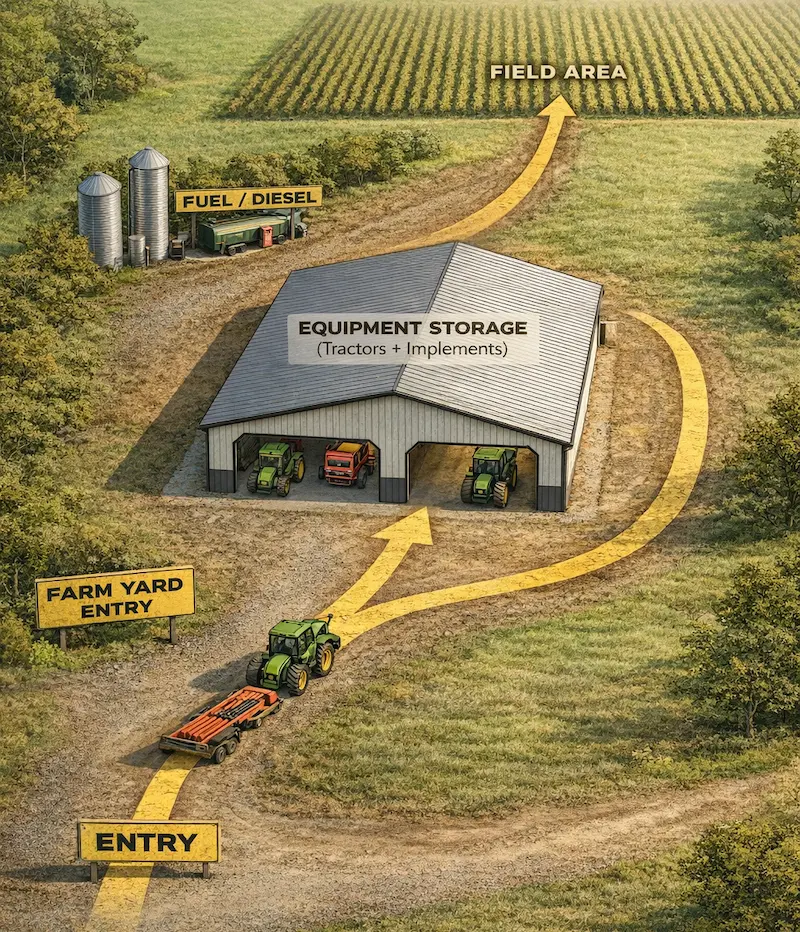
Plan your building based on how equipment moves across your farm
Plan Equipment Access — Not Just Storage
One of the most common planning mistakes is designing a building that technically fits equipment but doesn’t allow it to move comfortably.
Modern agricultural equipment is larger than many people expect.
Cab tractors, loaders, and implements require additional space for maneuvering and parking.
That’s why many farmers prefer layouts that allow equipment to:
- drive straight through the building
- enter from one side and exit the other
- park without blocking other machines
Wide door openings and open interior layouts make daily work significantly easier during planting and harvest.
If you’re focusing specifically on protecting machinery from weather, this guide explains the key considerations for equipment storage.
Door Placement Matters More Than Most People Think
Many people focus on door size. But door placement is often even more important.
A wide door doesn’t solve much if tractors still need to make tight turns to reach it.
Many farmers prefer placing large doors directly across from each other so equipment can drive straight through the building.
This approach allows:
- smoother traffic flow
- easier entry during busy seasons
- less backing and repositioning
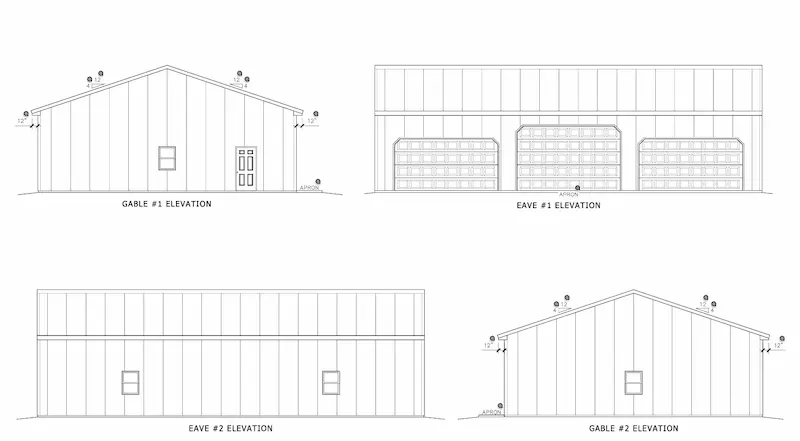
Testing layout options helps avoid tight maneuvering later
Not sure where your doors should be placed for smooth equipment flow?
Use our design tool to test door locations and layout options before you build.
Consider Wind and Snow Direction
Pennsylvania winters add another factor many first-time builders overlook.
Large doors that face prevailing winter winds can collect drifting snow, making access difficult after storms.
Many farmers place their primary equipment doors:
- on the leeward side of the building, or
- slightly angled away from prevailing winds.
This small decision can make winter access significantly easier.
Proper airflow inside your building also affects long-term usability, especially if you’re housing livestock. For a deeper look at ventilation best practices, you can review this guide:
Plan for Turning Radius — Not Just Equipment Width
Another detail many farmers underestimate is turning radius.
A tractor may only be eight or nine feet wide, but turning with an attached implement often requires far more space.
Planters, disks, wagons, and sprayers can dramatically increase the space required to maneuver.
Allowing additional interior clearance makes it easier to reposition equipment without tight maneuvering or risk of hitting building posts.
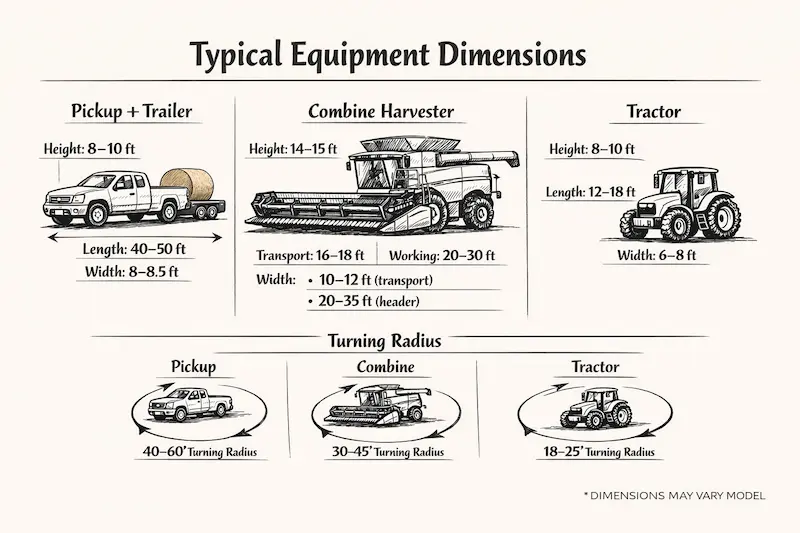
Equipment size and turning radius affect layout more than width alone
Typical Equipment Sizes That Shape Your Farm Pole Barn Layout
Understanding equipment size helps determine building width, length, and door height.
|
Equipment |
Typical Width |
Typical Height |
|
Tractor with cab |
8–10 ft |
9–11 ft |
|
Skid steer |
5–6 ft |
7–8 ft |
|
Combine header |
12–16 ft |
varies |
|
Planters / implements |
10–20 ft |
varies |
Most farmers allow additional clearance beyond these dimensions to simplify parking and maneuvering.
Plan Equipment Parking With Implements Attached
During busy seasons, many farmers prefer to park tractors with implements still attached.
Detaching equipment every time slows down work.
Buildings designed for attached equipment usually require longer parking lanes and wider interior spacing.
Thinking about how equipment will actually be parked helps prevent layout frustrations later.
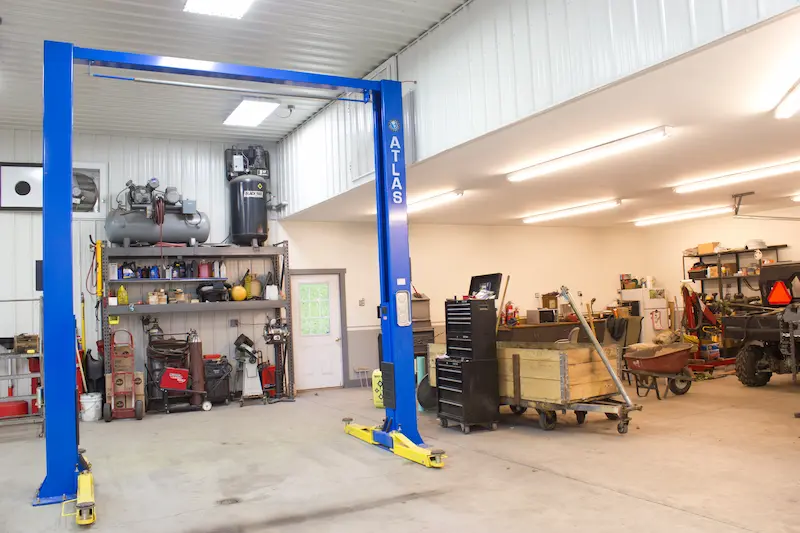
Adding a workshop space increases long-term building value
Include Workshop Space From the Beginning
Many farmers initially plan a building strictly for equipment storage.
But after a few seasons, that same building often becomes a repair shop as well.
Routine maintenance, oil changes, welding projects, and winter repairs all require space.
Planning a dedicated workshop area allows for:
- workbenches and tool storage
- improved lighting and electrical access
- organized parts and equipment storage
Even a modest workshop area can make the building much more useful throughout the year.
Plan for Future Equipment Growth
Farm operations rarely stay the same.
New tractors are larger. Additional implements get added. Equipment needs evolve.
Many farmers say the same thing a few years after construction:
“We wish we had built just a little bigger.”
Adding extra width or length during the planning stage often provides flexibility that becomes valuable later.
Common Layout Mistakes Farmers Make
Over the years, we’ve seen several planning mistakes that tend to cause problems later.
Some of the most common include:
Building too narrow for turning equipment
Machines may fit, but maneuvering becomes difficult.
Placing doors in the wrong location
Equipment must make tight turns or reposition multiple times.
Forgetting about future equipment upgrades
Newer machines often require additional height and width.
Not planning space for maintenance or repairs
Buildings designed only for storage often become crowded later.
Avoiding these common issues during the planning stage can make a building far more useful over time.
Try Different Farm Barn Layout Ideas Before You Build
Before finalizing a building layout, many farmers find it helpful to visualize how equipment will fit inside.
Testing different layouts helps answer questions like:
- Will tractors fit comfortably through the doors?
- Is there enough room to turn equipment?
- Where should the workshop area go?
- How will equipment move through the building?
Our design tool allows you to experiment with building sizes, door placements, and layout options before construction begins.
👉 Start Designing Your Building
It takes just a few minutes to explore different layouts and see what works best for your farm.
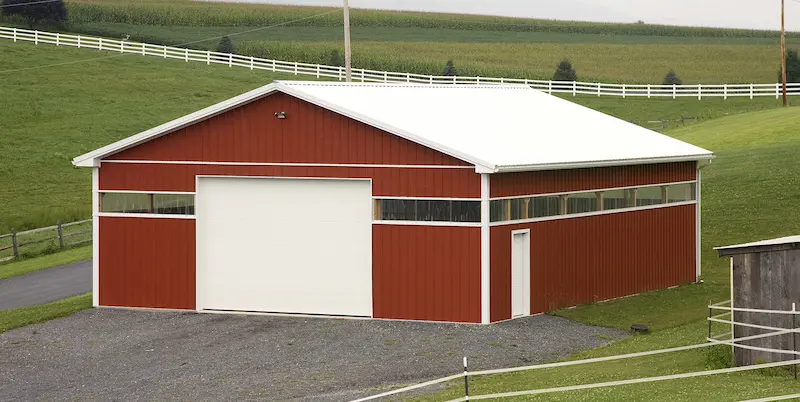
Testing layout options helps avoid tight maneuvering later
A Smarter Way to Plan a Pole Barn for Your Farm
A pole barn isn’t just another structure on the property — it becomes part of how the farm operates every day.
When layout, equipment access, and workflow are planned carefully, the building supports daily work instead of slowing it down.
At Timberline Buildings, we’ve spent decades helping Pennsylvania farmers design buildings that match the way their farms actually operate.
Thoughtful planning today helps ensure the building continues working for many years to come.
If you’re ready to move forward:
No signup • Takes 2 minutes
Personalized pricing • No obligation
Built in Pennsylvania • Amish Craftsmanship • Trusted Since 2003