

What a 24×32 Pole Barn Really Costs in Pennsylvania
And Why Online Estimates Often Miss Thousands
When researching the 24×32 pole barn cost in Pennsylvania, it’s common to see a surprisingly wide range of prices. Some estimates look unrealistically low, while others feel much higher than expected.
This gap is not caused by the building size itself.
It usually comes from how early pricing is presented in the post-frame construction process.
Most online prices only reflect a partial building shell — not a finished, permit-ready project.
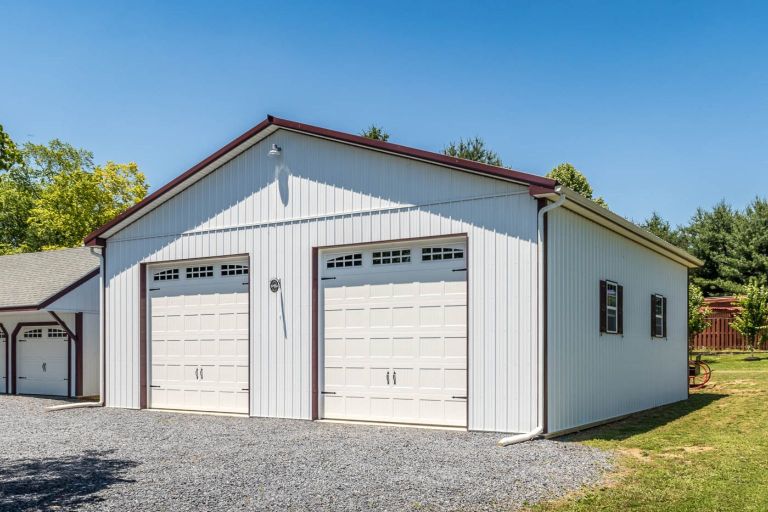
A 24×32 post-frame building (768 sq ft) remains a popular choice because it works well as a garage, workshop, or storage building without the complexity of larger structures. However, the final project cost is shaped by variables that are often discussed later — sometimes much later — in the planning process.
Want to see how layout, doors, and features affect pricing?
Design your 24×32 building
.
Why Many 24×32 Pole Barn Estimates Are Incomplete
In the post-frame construction industry, early pricing conversations often focus on the building shell alone. While this can provide a rough starting point, it rarely represents the full scope of a completed project.
Key cost drivers such as concrete work, site conditions, door layout, and engineering requirements are frequently addressed separately. When these items are added later, total costs can shift significantly — even though the building size hasn’t changed.
This is a common industry-wide issue, not the result of individual mistakes.
Common Budget Variables That Shape Final Cost
1. Door Design and Layout
→ Often the single biggest structural cost swing
Door selection has a major impact on pricing for a 24×32 pole barn.
Changes in:
-
Door width or height
-
Number of openings
-
Insulated vs. non-insulated doors
-
Track systems and openers
can all affect structural design and overall cost. Two buildings with the same footprint can differ dramatically in price based solely on door layout.
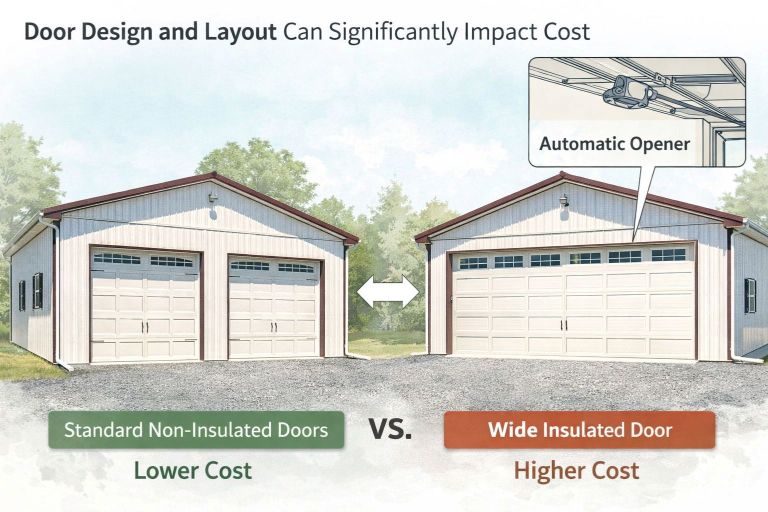
Door size and insulation choices can change structural requirements and overall pricing.
2. Concrete Scope
→ Frequently excluded from early estimates
Concrete is often discussed as a single line item, but real costs depend on several design decisions.
Pricing is influenced by:
-
Thickened edges or rat walls
-
Post pads
-
Slab thickness
-
Vapor barriers and finish expectations
Because concrete is commonly scoped separately from the building shell, it can represent a significant portion of the total project budget.
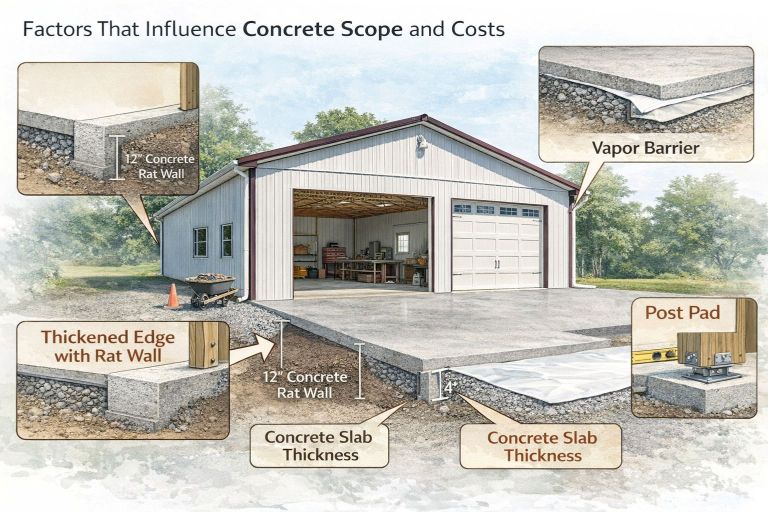
Concrete details like slab thickness and rat walls are often finalized later but can significantly affect total cost.
Still deciding which construction approach makes sense?
Compare pole vs. stick-built construction in Pennsylvania
.
3. Site Conditions and Access
→ One of the least predictable variables
Site preparation requirements vary widely.
Key factors include:
-
Slope and drainage
-
Fill and stone base needs
-
Equipment and truck access
-
Clearing and grading
Projects with level ground and easy access tend to remain more predictable, while challenging sites can introduce additional scope and cost.
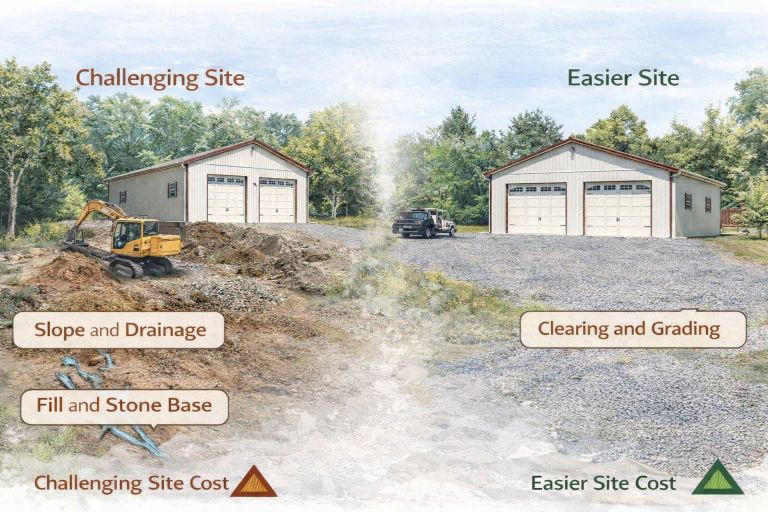
Site slope, drainage, and access can introduce additional costs beyond the building itself.
4. Engineering and Code Requirements
→ Location-specific, not size-specific
Local snow loads, wind exposure, and building codes directly affect post-frame design.
These requirements influence:
-
Post sizing
-
Truss engineering
-
Bracing and connection details
Buildings with identical dimensions may require very different engineering solutions depending on where they’re built in Pennsylvania.
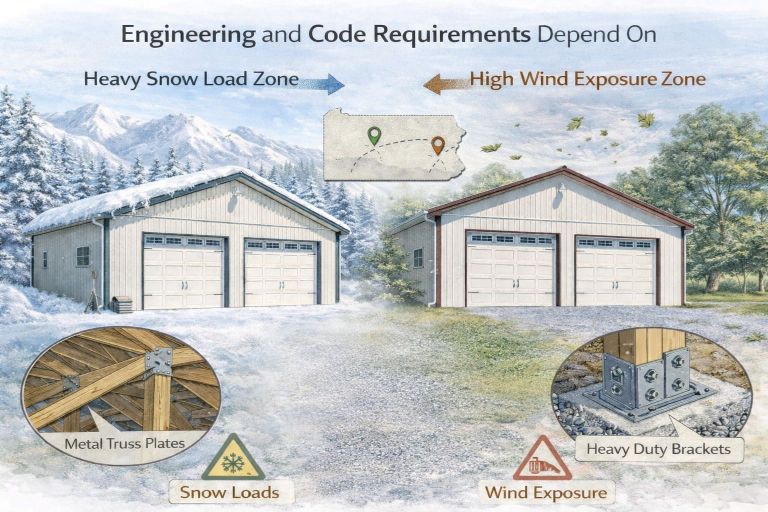
Engineering requirements vary by location, even for buildings with the same size.
5. Long-Term Use Considerations
→ Where many budgets quietly break
Many 24×32 buildings start as basic storage but later become workshops, hobby spaces, or conditioned areas.
When insulation, interior liner panels, ventilation, or electrical upgrades are added after construction, total project costs often exceed what early planning would have required. Anticipating future use helps avoid rework and unexpected expenses.
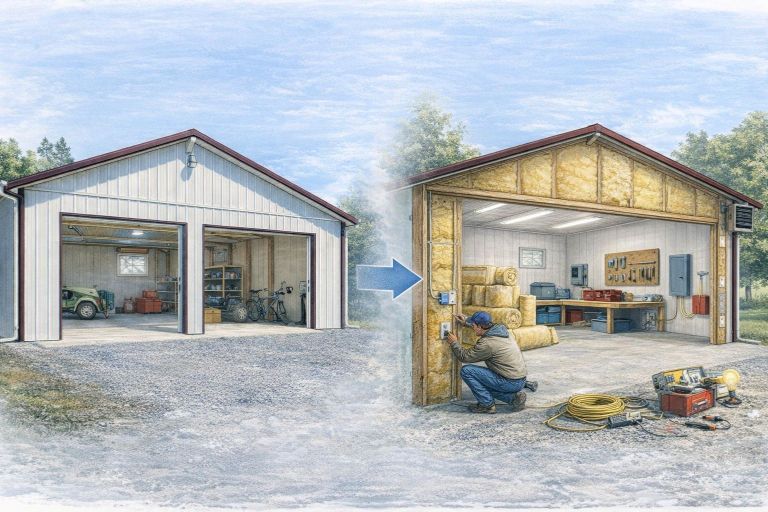
Planning for insulation and future use early helps avoid costly changes later.
So What Does a 24×32 Pole Barn Cost in Pennsylvania?
When all major variables are considered, professionally constructed 24×32 post-frame building shells in Pennsylvania usually fall within a broad range.
For general planning purposes:
-
Post-frame buildings often range from $20 to $60 per square foot, depending on design, engineering, site conditions, and features.
At 768 square feet, this places the 24×32 pole barn cost for many shell projects between $15,000 and $45,000.
Projects that include finished concrete, larger doors, or challenging site conditions often trend toward the upper end of this range.
Wide price ranges exist because post-frame construction is highly customizable — and early estimates frequently exclude project-specific factors.
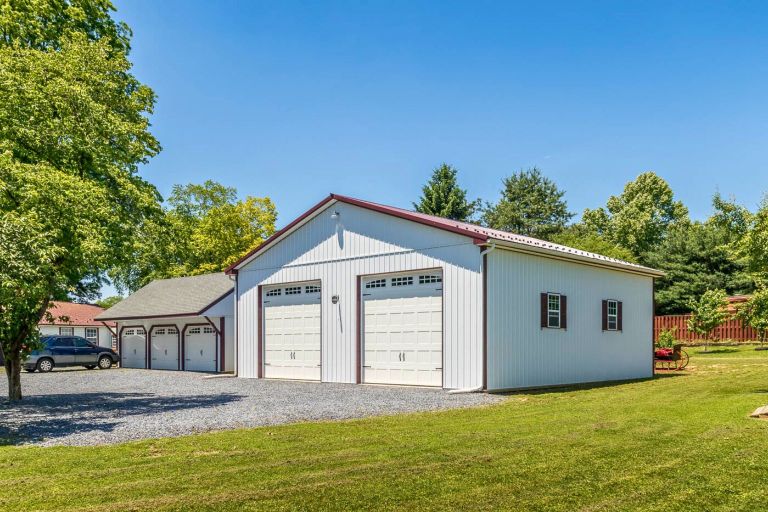
See a 24×32 project you like?
Use this project as a reference to request pricing
.
Where Materials-Only Kits Fit in the Market
Materials-only pole barn kits are commonly referenced during online cost research and are part of the broader post-frame marketplace.
These packages typically include framing, trusses, steel panels, and basic trim. They usually exclude labor, concrete, site preparation, equipment, permits, and inspections.
Timberline Buildings does not offer materials-only kits.
They are mentioned here only to help explain why some online prices appear dramatically lower than professionally constructed projects.
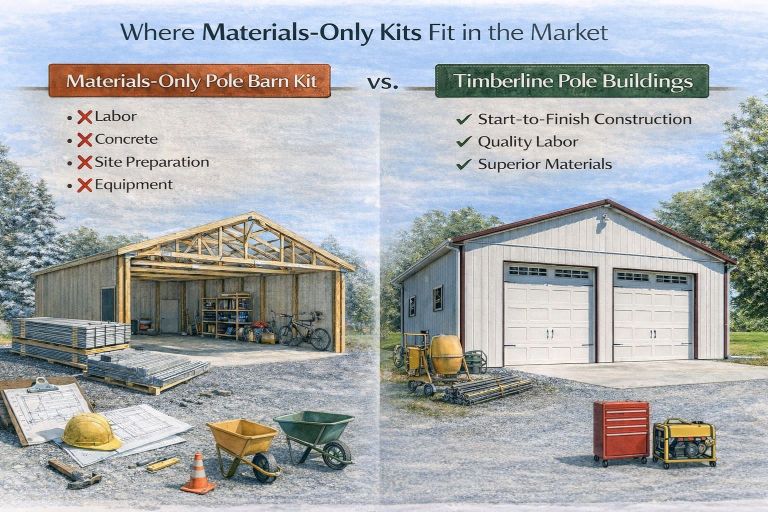
Many low online prices exclude labor, concrete, and site work, which can create misleading cost comparisons.
How Pricing Is Evaluated in Professional Post-Frame Construction
Pricing accuracy improves when discussions focus on the entire project scope, not just a starting number.
Professional evaluations consider:
-
Intended building use
-
Door sizes and layout
-
Site conditions and access
-
Concrete requirements
-
Future upgrade considerations
Addressing these factors early helps align expectations and reduces pricing surprises later.
Final Thought
A 24×32 pole barn can be a highly versatile and cost-effective building when planning reflects real-world conditions.
Understanding how post-frame pricing is typically presented — and where assumptions are commonly made — allows you to evaluate estimates more confidently and plan with fewer surprises.
Next Steps
✅ Design Your 24×32 Building
→ Customize layout, doors, and features before pricing
Customize This Building
✅ Compare Pole vs. Stick-Built Construction in Pennsylvania
→ Understand which construction method makes sense for your situation
Read the Comparison Guide
🟡 Ready for project-specific pricing?
→ Get pricing based on your site and building plans
Request a Quote